Exploring the Impact of Sound Pressure Levels in Commercial Dehumidifiers
Understanding Sound Pressure Levels in Dehumidifiers
What is Sound Pressure Level?
Sound pressure level measures the intensity of noise produced by operating equipment, expressed in decibels and directly relevant to commercial dehumidifier performance. Commercial dehumidifiers remove moisture from large spaces while generating varying noise outputs that affect worker comfort and productivity. Operators select units based on capacity in pints per day, such as 70-pint or 150-pint models, because higher extraction rates often correlate with stronger fans and elevated sound pressure levels. A commercial dehumidifier unit typically includes a condensate pump and drain hose to manage water removal automatically during continuous drying cycles. In practice, technicians monitor sound pressure level alongside temperature and humidity readings to ensure the dehumidified air meets project specifications without excessive disruption. Understanding these metrics helps facility managers balance effective dehumidification against acoustic demands in occupied environments.
Decibels represent a logarithmic scale where every 10 dB increase doubles perceived loudness, making even modest differences in commercial dehumidifier output noticeable over long shifts. For example, a unit operating at 55 dB produces roughly half the perceived volume of one at 65 dB, yet both may be required depending on space volume and occupancy patterns. Sound pressure measurements are typically taken at one meter from the unit under standard conditions, accounting for factors such as reflective surfaces that can amplify readings by 3–6 dB in enclosed warehouses or mechanical rooms.
Importance of Sound Pressure Levels in Commercial Settings
Sound pressure levels matter in commercial settings because excessive noise from dehumidifiers can interfere with operations, violate local regulations, and reduce occupant satisfaction. Warehouses handling sensitive inventory require quiet commercial dehumidifiers to prevent mold growth without disturbing staff or equipment. Construction sites use robust units that extract dozens of pints daily yet must limit sound pressure to protect hearing during extended drying after flooding events. Spas and hospitality venues demand low-noise models integrated with HVAC systems to maintain humidity control while preserving a relaxing atmosphere. Energy Star rated commercial dehumidifier units often achieve better sound profiles through efficient compressors and variable-speed fans measured in CFM. Selecting the right unit prevents complaints and supports consistent air flow that accelerates moisture removal across large square footage.
Local ordinances frequently cap continuous noise at 60–65 dB during daytime hours in mixed-use zones, pushing facility managers to prioritize models with documented sound pressure data. In healthcare-adjacent commercial spaces, levels above 55 dB have been linked to increased staff fatigue and reduced cognitive performance, underscoring the value of quieter units even when drying capacity remains unchanged.
The Role of Sound Pressure in Commercial Dehumidifiers
Factors Affecting Sound Pressure Levels
Multiple design elements influence sound pressure levels in commercial dehumidifiers. Fan speed, measured in CFM, directly raises noise when higher air flow is needed to process large volumes of humid air. Compressor type and insulation determine baseline sound output, while the presence of a condensate pump adds intermittent mechanical noise during drainage cycles. Hose routing and vibration dampening further affect perceived sound pressure level in the surrounding space. Commercial air dehumidifier models with larger ton ratings tend to run longer cycles that sustain elevated noise, especially during peak humidity control demands. Temperature fluctuations also play a role, as units work harder in hotter conditions and produce more sound. Manufacturers address these factors through variable-speed motors and enclosed cabinets that lower overall decibel output without sacrificing pints-per-day capacity or drying efficiency.
Scroll compressors paired with neoprene vibration isolators can reduce baseline noise by 4–8 dB compared with reciprocating types, while insulated cabinets containing dense foam further attenuate high-frequency fan whine. Proper hose routing that avoids contact with metal framing prevents resonant amplification, and rubber grommets at mounting points limit structure-borne vibration that can travel through concrete slabs in multi-story facilities.
Impact of Sound on Dehumidification Efficiency
Sound pressure does not directly alter dehumidification efficiency, yet it influences how operators deploy commercial dehumidifiers in real-world conditions. High noise levels may force reduced runtime in noise-sensitive warehouses or spas, slowing moisture removal and allowing mold to develop. Conversely, well-engineered units maintain strong CFM and ton performance while keeping sound pressure acceptable, enabling continuous operation after flooding or during construction drying projects. Efficient air flow design ensures dehumidified air reaches all corners of the space, preventing stagnant pockets of humidity. Energy Star certified commercial dehumidifier units often pair lower sound output with optimized heat exchange, delivering consistent results without excess energy use. Proper placement and ducting further enhance efficiency by directing quiet, conditioned air where it reduces overall humidity fastest.
Operators sometimes schedule high-CFM units for overnight operation when ambient noise masks their output, then switch to lower-speed modes during business hours. This hybrid approach preserves drying momentum while respecting acoustic limits, demonstrating that sound pressure management and moisture extraction can be balanced through thoughtful scheduling rather than equipment trade-offs alone.
Comparative Analysis of Commercial Dehumidifier Units
Noise Levels of Different Models
Commercial dehumidifier units vary widely in noise output depending on capacity and engineering. Entry-level 50-pint models for smaller spaces often register lower sound pressure levels around 50-55 decibels, suitable for offices or spas. Larger commercial dehumidifiers rated at 100 pints or more, equipped with powerful pumps and hoses, can reach 65-70 decibels during full operation. Construction-grade units prioritize rapid drying and therefore accept higher sound pressure in exchange for higher CFM and ton ratings. Warehouse operators compare these figures when choosing between portable and fixed commercial dehumidifier options, factoring in how noise travels through open floor plans. Energy Star models frequently incorporate quieter compressors that maintain extraction rates while reducing acoustic impact across extended drying periods.
Portable units with wheels and flexible ducts often exhibit 3–5 dB higher readings than fixed installations because of additional vibration paths, whereas ducted models can route noise outside the occupied zone entirely. Real-world measurements should account for multiple units running simultaneously, as two 60 dB machines can combine to approximately 63 dB when positioned close together.
Energy Star Ratings and Sound Pressure
Energy Star ratings encourage manufacturers to optimize both efficiency and sound performance in commercial dehumidifiers. Units earning this certification typically deliver strong pints-per-day removal with lower wattage draw and reduced sound pressure levels through advanced fan and compressor technology. In practice, an Energy Star commercial dehumidifier unit paired with proper humidity control settings maintains target moisture levels while producing less noise than non-rated competitors. Facility managers in warehouses and construction sites review these ratings alongside CFM and ton specifications to select equipment that supports continuous air flow without excessive heat or sound. Lower sound pressure also benefits spas where quiet operation preserves guest experience during ongoing dehumidification cycles.
Applications and Considerations for Sound Pressure in Various Spaces
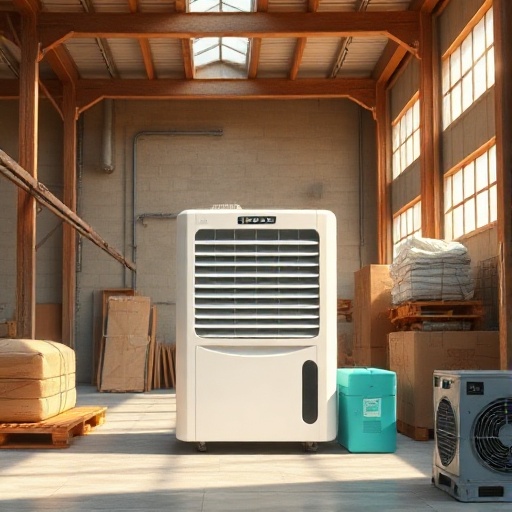
Dehumidifiers in Construction Sites
Construction sites rely on commercial dehumidifiers to accelerate drying of concrete, drywall, and flooring after water intrusion. These environments tolerate higher sound pressure levels because work crews wear hearing protection and operate during daytime hours. Units rated for 100-plus pints daily with integrated pumps and hoses handle large moisture loads while maintaining adequate air flow across unfinished spaces. Operators monitor temperature and humidity to prevent mold during extended drying phases. Sound pressure considerations become critical when projects occur near occupied buildings, prompting selection of variable-speed commercial dehumidifier models that lower noise during off-peak periods without sacrificing ton capacity or overall dehumidification speed.
Optimal Dehumidifiers for Warehouses and Spas
Warehouses and spas demand commercial dehumidifiers that balance moisture removal with minimal acoustic disturbance. In warehouses, high-CFM units prevent condensation on stored goods and reduce mold risk across vast floor areas. Spas require quieter models that integrate with HVAC systems to sustain precise humidity control and comfortable temperatures for patrons. Energy Star rated commercial dehumidifier units excel here because they deliver reliable pints extraction while limiting sound pressure. Proper hose and pump configurations ensure continuous drainage without manual intervention. Facility teams evaluate air flow patterns to confirm dehumidified air reaches every zone, maintaining consistent conditions that protect inventory and enhance guest comfort simultaneously.
Best Practices for Choosing the Right Commercial Dehumidifier
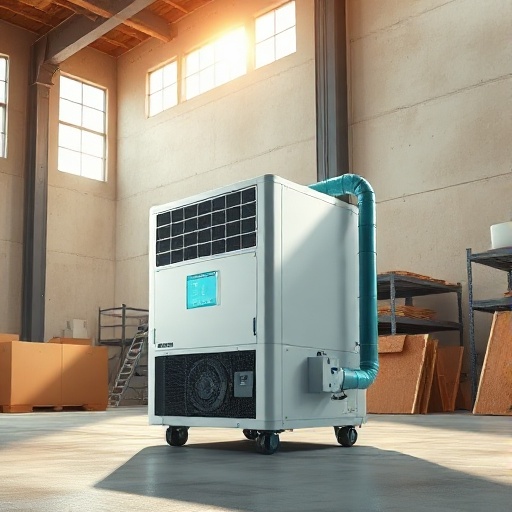
Evaluating CFM and Ton Ratings
Selecting a commercial dehumidifier begins with matching CFM and ton ratings to the size and moisture load of the target space. Higher CFM values move more air through the coils, accelerating drying after flooding or during construction. Ton ratings indicate cooling capacity that supports efficient moisture condensation at given temperature and humidity levels. Commercial dehumidifiers with oversized capacity in pints often include robust pumps and hoses for uninterrupted operation. Energy Star certified models combine these metrics with lower sound pressure levels, ensuring the unit runs quietly while delivering strong performance. Operators calculate required air changes per hour to confirm adequate coverage without excess noise or energy consumption across warehouses, spas, or active job sites.
Maintaining Humidity Control and Air Flow
Effective humidity control depends on consistent air flow throughout the dehumidified space. Technicians position commercial dehumidifier units to promote even circulation, using auxiliary fans when necessary to reach corners prone to moisture accumulation. Regular filter cleaning and coil maintenance preserve both CFM performance and low sound pressure levels over time. In spas and warehouses, integrated sensors adjust operation based on real-time temperature and humidity data, preventing over-drying or mold formation. Hose routing and pump function require periodic checks to avoid leaks that could undermine drying progress. Choosing commercial dehumidifiers with variable-speed options allows fine-tuning that sustains optimal conditions while keeping noise within acceptable limits for each environment.