Maximizing Efficiency with Swiss Machining for High-Volume Production
Understanding Swiss Machining
Overview of Swiss Machining Technology
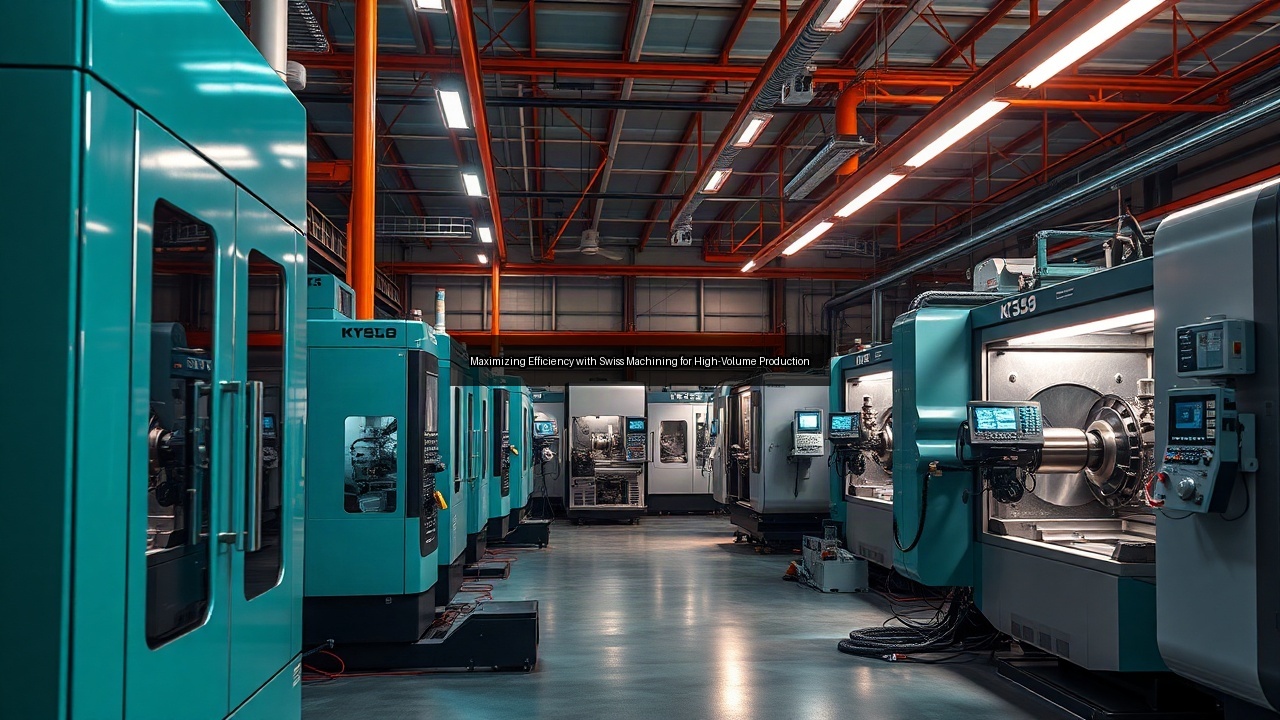
Swiss machining delivers unmatched precision for small, intricate components through a specialized turning process that supports the workpiece close to the cutting tool. This approach minimizes deflection and enables tight tolerances even at high speeds. Machine shops rely on swiss machining to produce parts for medical devices, electronics, and automotive systems where consistency matters most. The technology evolved from traditional screw machines into advanced CNC systems that handle complex operations in a single setup. Operators program swiss lathes to perform turning, drilling, and milling without repositioning the material, which boosts overall throughput in high-volume runs.
Originating in the late 19th century in Switzerland’s watchmaking industry, the process was developed to meet the demand for miniature, high-accuracy components such as gears and pivots. Early mechanical versions used cam-driven systems, but modern CNC-controlled swiss lathes incorporate up to 12 axes of motion, achieving tolerances as tight as ±0.0001 inches on parts measuring under 1.25 inches in diameter. This evolution has transformed swiss machining from a niche craft into a cornerstone of precision manufacturing, supporting industries that require both micro-scale features and repeatable quality across thousands of cycles.
Key Differences Between Swiss and Conventional Machining
Conventional lathes hold the workpiece at one end, which can cause vibration during long cuts, whereas swiss style lathes guide the bar stock through a collet and bushing right at the tool point. This fundamental difference allows swiss machining to maintain accuracy on slender parts that conventional machines struggle with. CNC swiss machining further separates itself by integrating multiple tools on a single machine, reducing the need for secondary operations. Productivity rises because operators complete more features per cycle compared to standard CNC machining setups that require multiple machines and fixtures.
The guide bushing in swiss lathes provides continuous radial support immediately adjacent to the cutting zone, virtually eliminating whip and chatter even when machining parts with length-to-diameter ratios exceeding 10:1. In contrast, conventional chucking methods often require steady rests or multiple setups for long components. Additionally, swiss machines frequently feature dual spindles and gang tooling that enable simultaneous front and back operations, cutting total cycle times by 30–50 percent on complex geometries while maintaining surface finishes below 8 microinches without secondary polishing.
Applications in Aerospace and Other Industries
Aerospace manufacturers choose swiss machining for critical fasteners, valve components, and sensor housings that demand exact geometries and material integrity. The process excels with nickel alloys and other high-performance metals that resist heat and corrosion. Beyond aerospace, swiss turning supports high volumes of watch parts, dental implants, and hydraulic fittings. Machine shops serving these sectors use swiss precision machining to meet strict certification standards while keeping scrap rates low across large production runs.
In the medical field, swiss lathes routinely produce bone screws, spinal implants, and endoscopic instrument shafts from 316L stainless and titanium, often incorporating micro-threads and cannulated features in one setup. Electronics manufacturers depend on the process for RF connectors, fiber-optic ferrules, and miniature pins used in smartphones and avionics, where concentricity and surface integrity directly affect signal performance. Automotive applications include fuel injector nozzles and transmission valve spools that must withstand extreme pressures while meeting zero-defect quality mandates.
The Swiss Machining Process
Step-by-Step Breakdown of the Machining Process
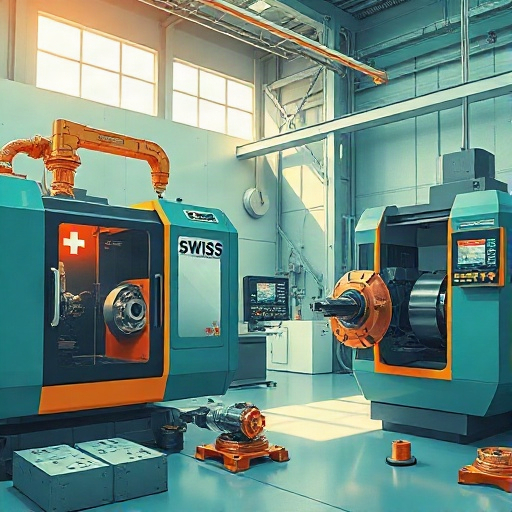
The swiss machining process begins with bar stock feeding through the guide bushing into the work zone. CNC machines then execute turning, grooving, and threading in programmed sequences while the material advances automatically. After each feature completes, the lathe indexes for the next operation without stopping the spindle. Finished parts eject into collection bins while fresh stock advances, enabling continuous runs that maximize volumes. Quality checks occur at set intervals to verify dimensions remain within tolerance throughout the shift.
Bar stock is typically loaded in 10- to 12-foot lengths and advanced by a servo-driven feeder synchronized with the main spindle. As the material emerges from the bushing, carbide or ceramic inserts perform OD turning, while live tooling drills cross-holes or mills flats. Thread whirling or single-point threading creates precise profiles on medical screws or hydraulic fittings. Once the part is complete, a cutoff tool separates it, and the subspindle may perform back-working operations before the finished component drops into a parts catcher, allowing the next cycle to begin without interruption.
Role of CNC Machines and Swiss Lathes
CNC machines drive swiss lathes with precise servo controls that coordinate multiple axes simultaneously. Swiss lathes equipped with live tooling perform milling and drilling off-center without transferring parts to another station. This integration shortens lead times and improves repeatability across thousands of machined components. Operators monitor tool wear through the control interface and adjust offsets on the fly to sustain productivity during extended high-volume production.
Modern controls such as Fanuc or Siemens platforms manage rapid traverse rates exceeding 1,200 inches per minute and support conversational programming for quick job changes. Live tooling stations rotate at up to 8,000 RPM, enabling polygon milling and eccentric drilling in the same cycle. Integrated tool monitoring uses acoustic emission sensors to detect wear before it affects part quality, automatically calling for offsets or tool changes to maintain six-sigma process capability over runs of 50,000 pieces or more.
Utilizing Automation for Enhanced Efficiency
Automation systems load bar stock, change tools, and measure parts without manual intervention, allowing swiss machining cells to run unattended overnight. Bar feeders and robotic unloaders keep machines producing consistent output even when volumes spike. Shops that combine automation with swiss style lathes report higher machine utilization rates and lower labor costs per part. Real-time monitoring software alerts staff to issues before they halt production, protecting tight delivery schedules.
Robotic arms equipped with vision systems can sort finished parts by feature or material batch, while automatic bar loaders handle diameters from 0.04 to 1.25 inches. In high-volume environments, palletized tool changers hold 20–30 tools and swap them in under five seconds. IoT-enabled dashboards track OEE metrics in real time, allowing managers to optimize shift schedules and predict maintenance windows, often pushing machine utilization above 85 percent even during lights-out operations.
Maximizing Productivity in High-Volume Production
Importance of Tooling in Swiss Machining
Proper tooling directly influences cycle times and surface finishes in swiss machining. Carbide inserts designed for high-speed cutting maintain edge life when machining nickel and stainless steels at volume. Shops optimize tool geometry and coatings to reduce chatter and extend intervals between changes. Investing in premium tooling pays off through fewer interruptions and lower overall cost per machined part during long production runs.
Coated inserts with TiAlN or DLC layers withstand temperatures above 1,000 °F, enabling speeds of 400–600 surface feet per minute on 17-4 PH stainless. Custom chip-breaker geometries prevent stringy chips that can wrap around slender parts, while through-tool coolant delivery at 1,000 psi evacuates material efficiently. Shops often standardize on quick-change tool holders that reduce setup time by 40 percent and maintain repeatability within 0.0002 inches across multiple machines.
Optimizing Machine Settings for Volume Production
Operators fine-tune spindle speeds, feed rates, and coolant pressures on swiss lathes to balance tool life against throughput. CNC programs store optimized parameters for each material and geometry, allowing quick changeovers between jobs. Consistent settings across multiple machines ensure every part meets specifications even when volumes reach tens of thousands. Regular calibration of swiss machining equipment prevents drift that could scrap batches and erode productivity gains.
Adaptive control software automatically reduces feed rates when cutting forces spike, protecting tools during unexpected material variations. Parameter libraries stored on the machine control or in a central database enable operators to recall proven recipes for 303 stainless or Inconel 718 in seconds. Weekly laser calibration of linear scales and verification of bushing alignment ensure that machines remain within 2 microns of nominal positioning, supporting Cpk values above 1.67 on critical diameters.
Strategies for Reducing Cycle Times
Reducing cycle times starts with combining operations on one swiss lathe rather than moving parts between machines. Overlapping cuts with simultaneous tooling and minimizing air time through efficient tool paths accelerate output. Shops also batch similar parts to reduce setup frequency and keep machines running longer. These tactics compound to deliver substantial productivity increases when producing high volumes of precision components.
By programming overlapping roughing and finishing passes on separate axes, cycle times on multi-featured connectors can drop from 90 seconds to under 45 seconds. Batch processing of 500-piece families reduces setup from 45 minutes to under 10 minutes per job. Additional gains come from optimized peck drilling cycles and constant surface speed adjustments that maintain peak cutting efficiency throughout the entire bar length.
Benefits of Swiss Machining for Precision Parts
Achieving Complex Geometries with Swiss Lathes
Swiss lathes create intricate features such as undercuts, threads, and cross-holes in one continuous cycle. The guide bushing support lets operators machine long, slender parts with aggressive depths of cut that would deflect on conventional equipment. This capability expands design possibilities for engineers who need compact, multi-featured components without compromising strength or accuracy in high-volume production.
Designers can incorporate eccentric cam profiles, internal hex broaches, and micro-grooves on parts as small as 0.5 mm in diameter. The single-setup approach eliminates tolerance stack-up from multiple fixtures, routinely holding true position within 0.0005 inches across features separated by several inches. This geometric freedom allows product teams to consolidate assemblies and reduce overall part count without sacrificing performance.
Material Considerations: Working with Nickel and Other Alloys
Nickel alloys require careful speed and feed management to avoid work hardening during swiss machining. Swiss lathes equipped with high-pressure coolant systems evacuate chips efficiently and control heat buildup. Shops that master these parameters produce reliable parts from difficult materials while maintaining tool life across large volumes. The same techniques apply to titanium and cobalt chrome, broadening the range of industries that benefit from swiss precision machining.
High-pressure coolant at 1,500 psi directed through the tool tip prevents built-up edge on Inconel and Hastelloy, extending insert life by up to three times. Titanium alloys benefit from sharp, positive-rake geometries and low radial engagement strategies that limit work hardening. Cobalt-chrome orthopedic components achieve sub-10 microinch finishes directly from the machine, reducing or eliminating costly grinding operations.
Quality Control Measures in Swiss Precision Machining
In-process probing and laser measurement systems verify critical dimensions on every part or at programmed intervals. Statistical process control tracks trends so adjustments happen before defects accumulate. Documented procedures and calibrated gauges ensure traceability required by aerospace and medical customers. These measures protect reputation and reduce rework costs when running swiss machining at scale.
Automated vision systems inspect thread pitch and surface defects at rates exceeding 60 parts per minute, while air-gage stations confirm bore diameters to sub-micron resolution. SPC software calculates real-time capability indices and triggers tool offsets when trends approach control limits. Full material and process traceability, including heat-lot records and machine logs, satisfies AS9100 and ISO 13485 audit requirements without additional paperwork.
Future Trends in Swiss Machining Technology
Integrating Advanced Software Solutions
Modern software platforms simulate tool paths and optimize programs before any metal is cut, shortening development time for new parts. Cloud-based monitoring aggregates data from multiple swiss lathes to identify bottlenecks and predict maintenance needs. Integration with enterprise systems allows real-time visibility into production volumes and machine utilization across the shop floor.
Digital twin simulations validate fixturing and collision avoidance weeks before first-article production. Machine-learning algorithms analyze historical cycle data to recommend feed-rate increases that boost output by 15–20 percent while preserving tool life. ERP connectivity pushes live job status and material consumption directly into scheduling systems, enabling dynamic capacity planning across multi-site operations.
Emerging Innovations in Swiss Machining Equipment
Next-generation swiss machining equipment features faster spindles, more live tools, and enhanced thermal stability for tighter tolerances at higher speeds. Hybrid machines combine additive capabilities with traditional turning to create near-net shapes that require less material removal. These innovations expand what swiss style lathes can accomplish in single setups while supporting growing demand for complex, high-volume components.
Spindles rated above 20,000 RPM with active thermal compensation maintain micron-level accuracy even during continuous 24-hour runs. Hybrid platforms deposit laser-clad material before final machining, reducing buy-to-fly ratios on expensive alloys. Modular machine designs now allow shops to add B-axis milling or grinding spindles as demand evolves, protecting capital investment while meeting increasingly stringent geometric requirements.
Sustainability Practices in High-Volume Machining
Shops reduce waste by recycling chips and selecting cutting fluids that last longer between changes. Energy-efficient motors and regenerative braking on CNC machines lower power consumption during continuous swiss machining operations. Optimized nesting and nesting software minimize bar end scrap, improving material yield across large production volumes. These practices lower operating costs and meet customer expectations for responsible manufacturing.
Closed-loop coolant filtration systems extend fluid life beyond 12 months, cutting disposal costs and environmental impact. Regenerative drives recover braking energy that would otherwise dissipate as heat, lowering electricity usage by 10–15 percent. Bar-end optimization software reduces remnant lengths to under 2 inches, increasing material utilization rates above 95 percent on high-value alloys and supporting corporate sustainability goals.